Complex Trauma Therapy
You learned how to survive. Now you get to learn how to feel safe.
Maybe you've always been the one who copes. You keep going, keep adapting, keep reading the room.
But underneath, your body rarely gets to rest. You brace for things that never come. You feel too much, or nothing at all. You know your history shaped you, but knowing hasn't made it stop.
Complex trauma rarely comes from a single moment. It grows from years of staying on guard: in a family, a relationship, or an environment that never felt safe.
WHAT IS COMPLEX PTSD?
When stress began early and never let up.
Complex PTSD (C-PTSD) is a set of responses that develop after trauma that was prolonged or repeated, often beginning in childhood and often within relationships you depended on. It can grow out of caregivers who were frightening, unpredictable, or emotionally unavailable; ongoing neglect or abuse; living with domestic violence, addiction, or untreated mental illness at home; or facing bullying, discrimination, or other overwhelming stress without an adult who protected you.
Because these experiences may have been all you knew, they shape how you see yourself, other people, and the world. What you're living with now are adaptations that once helped you get through. They make sense, and they can change.
WHY C-PTSD IS OFTEN MISSED
Many people are told it's something else.
If you've collected diagnoses that never quite fit, you're not alone. C-PTSD is recognized in the World Health Organization's ICD-11, but it isn't a separate diagnosis in the DSM-5, the manual most U.S. clinicians use. As a result, it's often folded into PTSD or overlooked. Its symptoms can resemble anxiety, depression, ADHD, bipolar disorder, or borderline personality disorder, and it often occurs alongside them. Without a full picture of your history, it's easy to treat the symptoms and miss the root.
An accurate understanding isn't a label to carry with shame. It's a map toward the kind of care that actually helps.
WHAT SHAPES C-PTSD
Why the same history affects people differently.
Two people can grow up in the same home and leave with very different wounds. C-PTSD develops from a mix of factors:
Intensity, length, and timing: Trauma that is severe, ongoing, or happens during sensitive stages like early childhood or adolescence.
Genetics: A family history of anxiety or PTSD can increase vulnerability.
Home environment: Caregivers carrying their own trauma may struggle to offer steady, attuned care.
Before birth: Significant stress during pregnancy can affect how a baby's stress system develops.
Family dynamics: The circumstances around a pregnancy or birth, or a child's temperament, can shape how a parent bonds with them.
What was modeled: Inconsistent care, few healthy routines, or exposure to risky behaviors at home.
Learning differences or ADHD: These and early trauma often influence each other, and both can be misunderstood by caregivers.
Missing protective support: Without a safe adult, community, or friendships to buffer the impact, trauma's effects run deeper.
ATTACHMENT AND C-PTSD
Your earliest relationships taught you what to expect from connection.
Secure attachment forms when a caregiver is safe, predictable, and attuned, and repairs the moments they get it wrong. When care was inconsistent, distant, or frightening, you may have learned to cling and fear abandonment, to rely only on yourself, or to feel drawn to and afraid of the same people. These patterns often carry into adult relationships, and they can be reshaped.
HOW C-PTSD AFFECTS THE MIND AND BODY
Survival responses that outlasted the danger.
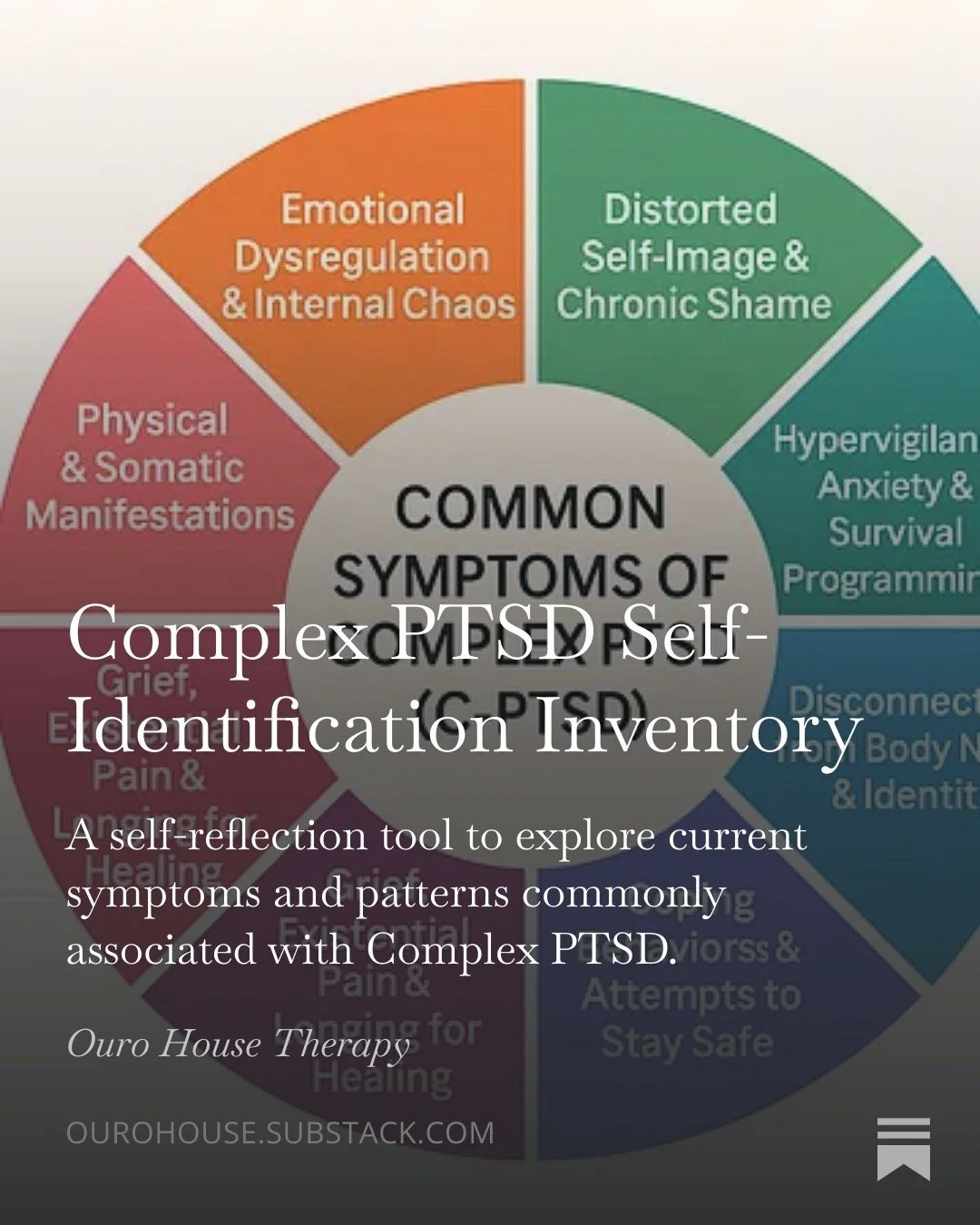
Painful beliefs: Deep-seated beliefs about yourself, others, and the world, like "something is wrong with me."
Shame: A lasting sense of being bad, unworthy, or damaged, rather than of having been hurt.
Emotional overwhelm: Waves of anxiety, despair, loneliness, or hopelessness, often set off by rejection or loss.
Body memories: Tension or sensations that hold old threat, sometimes with no clear memory attached.
Past and present blurring: Reactions that feel as though the past is happening now.
Hypervigilance: Constantly reading faces, tone, and body language to stay safe.
Avoidance and dissociation: Numbing out, feeling foggy or far away, losing time, or turning to behaviors that help you not feel.
Relationship patterns: Pulling away, pushing people off, or repeating familiar painful dynamics.
Curious which survival responses you reach for most? Take the free Four F's quiz →

THE PHYSICAL TOLL
When your body never got the chance to rest.
Long-term stress can leave your nervous system cycling between overdrive and shutdown. Over time, this can disrupt sleep, digestion, and immune function and contribute to inflammation. Many people with C-PTSD also live with fatigue, gut issues, chronic pain, or autoimmune and other chronic conditions. Understanding this connection can help you partner with your medical care instead of feeling dismissed by it.
HOW WE'LL WORK TOGETHER
A phased, holistic process, paced to what your system can hold.
Complex trauma isn't healed by a single method. My work follows Dr. Judith Herman's three-stage model for treating complex trauma, and we return to earlier stages whenever you need to.
STAGE 1
Safety & Stability
We start by understanding your full history, including your strengths and what has helped you cope, and getting clear on what you're experiencing. Together we build resources: grounding and regulation skills, self-compassion practices, and a felt sense of safety in your body. We also begin getting to know the protective parts of you.
STAGE 2
Processing, at a Pace Your Body Can Hold
When you feel resourced, we begin working with painful memories and the themes running through them, like shame, abandonment, or never feeling good enough. We stay within your window of tolerance, keeping one foot in the present so the past can finally settle. This includes experiences from before you had words for them.
STAGE 3
Reintegration & Growth
As old patterns loosen, we help the changes take root in how you see yourself and how you relate to others. This stage often includes grieving what you didn't receive, making peace with what was, and building the resilience that lets you not only recover, but grow.
Approaches may include: EMDR Therapy · Somatic Therapy · Internal Family Systems (IFS) · Cognitive Processing Therapy (CPT) · Attachment & Relational Therapy · Energy Psychology
Telehealth for NY, FL, MI residents
AN INTEGRATIVE APPROACH
Whole-person care, every step of the way.
One method may guide our work, but it’s never the only one. Your past lives in your mind, body, and relationships. I combine evidence-based and mind-body approaches to help you work through the past and move forward with more support, clarity and confidence.
WHAT WE DO TOGETHER
The questions we work through together.
"Why do I feel like something is wrong with me?" Using CBT and CPT, we trace beliefs like "I am unlovable," "I am bad," "I don't belong," or "I am helpless" back to where they started and build something more accurate.
"Why do I keep falling into patterns I don't want?" People-pleasing, shutting down, overworking, or numbing out often began as protection. Through parts work and somatic therapy, we understand what they're guarding so they can loosen their grip.
"Why do I struggle to trust people, even when they seem to treat me well?" We work together to build safe-enough relationships, starting with ours, where you can feel seen, accepted, and connected without bracing for rejection. Here, you can disagree, push back, or pull away, and we repair it together.
"Why can the past still feel so present?" Once you feel steady enough, we process painful memories so the emotions tied to them can release.
"Why does my body so often feel tense, drained, or unwell?" Long-term stress can keep your nervous system stuck between overdrive and shutdown. Helping it settle can reduce chronic stress and, for many people, ease physical symptoms.

WHAT CHANGES AS THE WORK UNFOLDS
Less bracing. More living.
Patterns that once felt automatic begin to feel more flexible
More space between what you feel and how you respond
Your inner critic softens into something closer to compassion
Relationships feel steadier, with less need to withdraw, appease, or overextend
Growing trust in your own thoughts, needs, and decisions
A greater sense of stability in your body, and a way of moving through life that feels grounded and your own

MEET YOUR THERAPIST
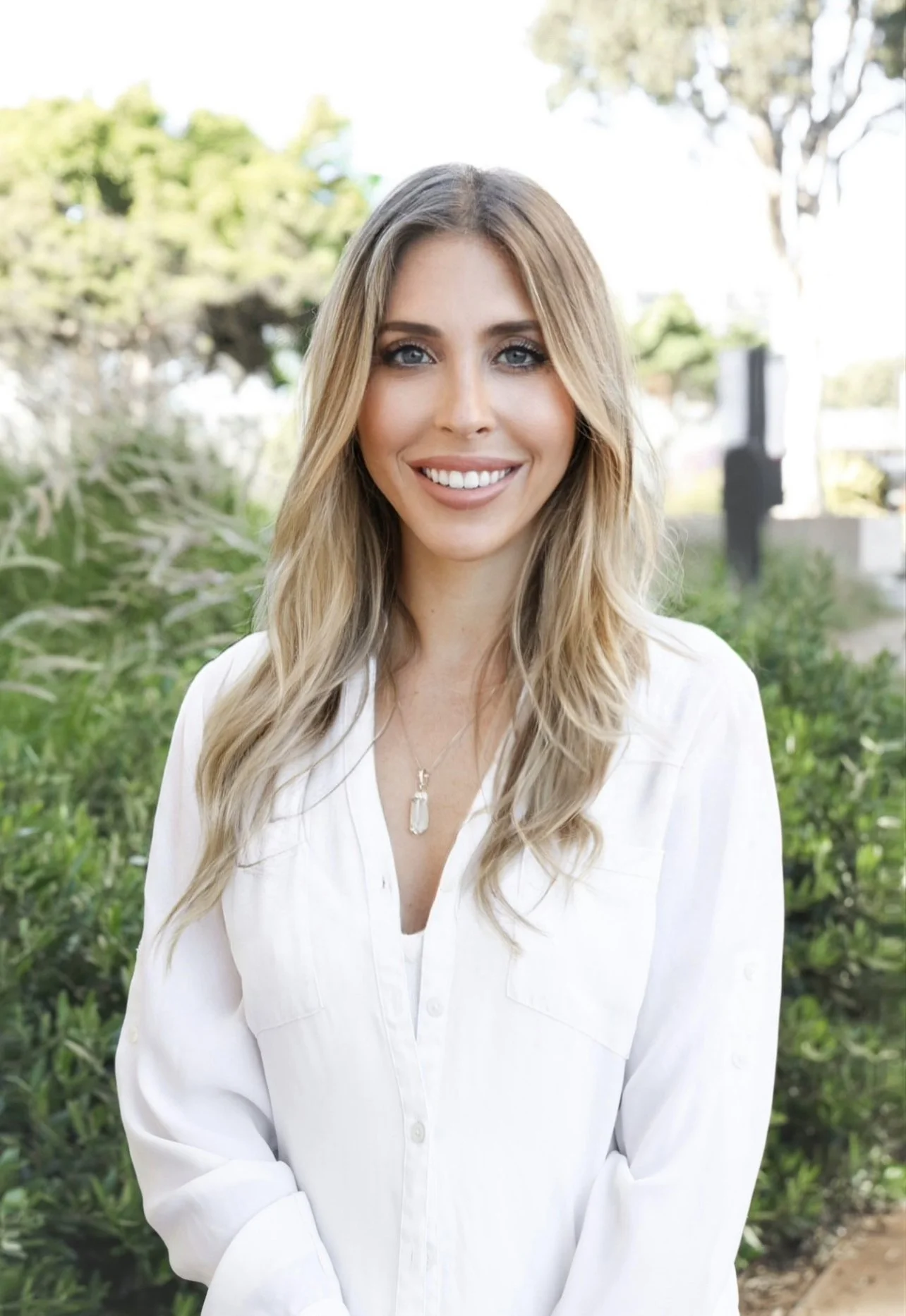
Lisa Kent, LCSW
CCTP-II · EMDR-C
Complex trauma is at the center of my work. I follow a phased approach: first we build safety and stability in your nervous system, then we process what happened at a pace your body can handle, and finally we focus on reconnecting with a life that feels like yours. I draw on EMDR, somatic therapy, IFS, and attachment-focused work, choosing what fits you rather than relying on a single method.
QUESTIONS, ANSWERED
Complex trauma therapy FAQs
-
PTSD often follows a single traumatic event. Complex PTSD develops from repeated or ongoing trauma, usually where escape felt impossible. Along with PTSD symptoms, it tends to affect self-worth, emotional regulation, and relationships.
-
No. Safety and stability always come first, and approaches like EMDR, somatic therapy, and parts work don’t require you to retell everything.
-
That’s common. Complex trauma is often held in the body and in patterns rather than clear memories. Somatic and parts-based work can meet what you feel, not just what you remember.
-
Research has linked early adversity and chronic stress with higher rates of chronic illness, including autoimmune conditions. Therapy doesn’t replace medical care, but calming the stress response can support your whole system.
-
It’s different for everyone. Most clients meet weekly for the first three to six months, and then we review your progress together.
-
It’s a free, no-pressure 15-minute video call. We’ll talk briefly about what’s bringing you to therapy and what you’re hoping for, I’ll answer your questions about how I work, fees, and out-of-network reimbursement, and together we’ll decide whether we’re a good fit. You don’t need to prepare anything, and there’s no obligation to book.
-
Sessions are $200 per hour of work together. I am in-network with BCBS and BCN plans for Michigan residents. For New York and Florida residents, I partner with Mentaya to help you use your out-of-network benefits. Depending on your plan, up to 80% of your session cost can be reimbursed, and all of your claims are handled for you. You can check your benefits here, or we can review them together during your free consultation.
HEALING THROUGH RECONNECTION
You've carried this long enough. You don't have to carry it alone.
Complex trauma touches every part of life, so healing has to reach every part of you: your mind, your body, your relationships, and your sense of meaning. What happened to you shaped you. It doesn't get to define you.
NY, FL, MI Residents
Have a question before booking? Submit it here.
SUBSCRIBE FOR FREE INSIGHTS
Read more from Ouro House
Essays on complex PTSD, the trauma responses, and what healing actually looks like.