RELIEF
RESILIENCE
Therapy for
Chronic & Autoimmune Conditions
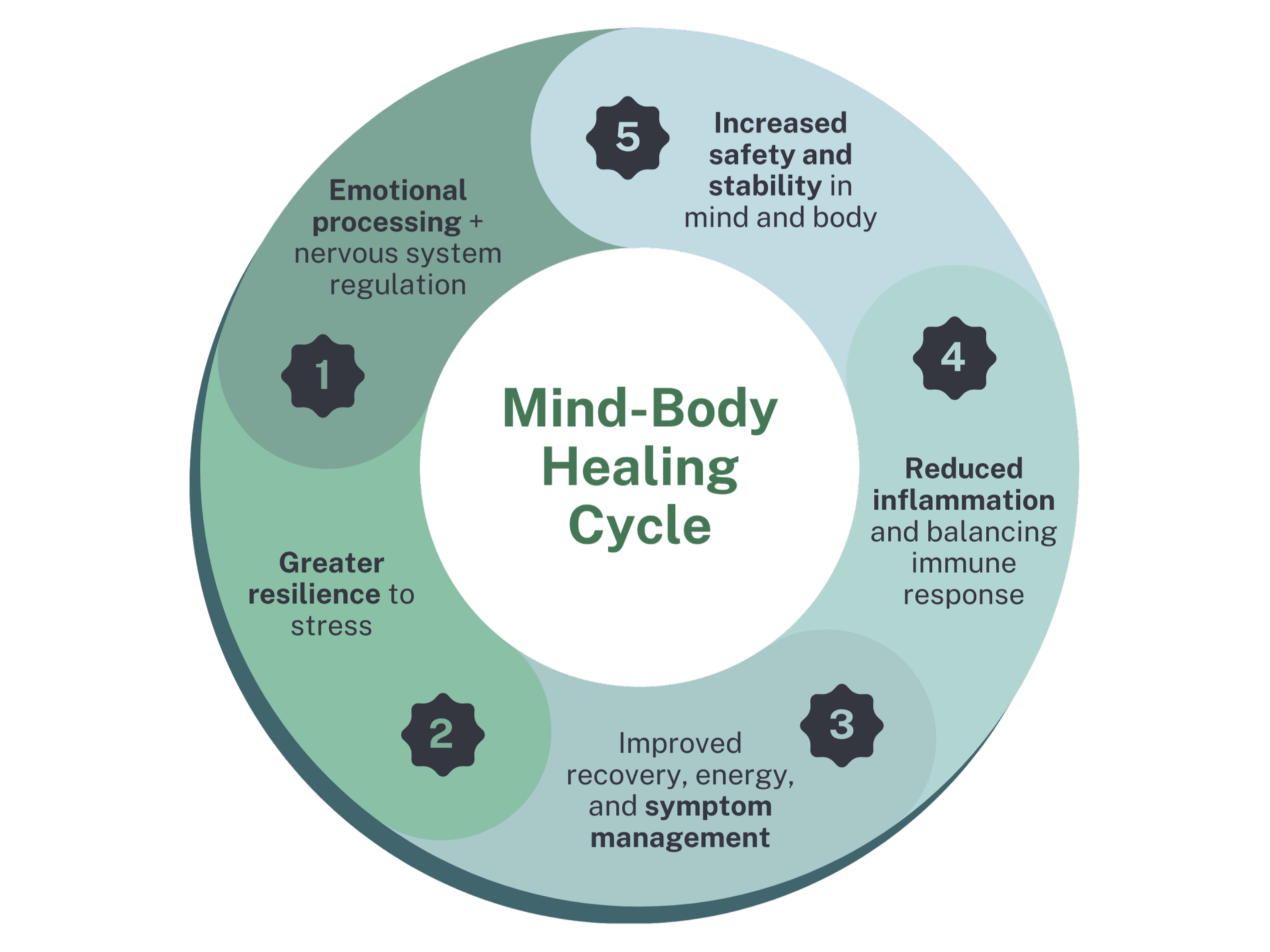
The same systems that drive stressed-based illness also allow for healing.
Autoimmune Conditions
The body begins to respond in ways that feel heightened, inconsistent, or difficult to predict, often moving through cycles of flare, partial recovery, and recurrence.
For some, this has been formally diagnosed as an autoimmune condition.
For others, it shows up as a pattern of symptoms that feel real, persistent, and difficult to fully explain.
Over time, it can feel less like isolated symptoms and more like a system that is reacting and not fully settling.
-
Ongoing fatigue that doesn’t fully resolve, even with rest.
Cycles of inflammation, pain, or physical discomfort that come and go without a clear pattern.
Digestive issues, skin reactions, or other physical symptoms that flare unpredictably.
Periods of feeling relatively stable followed by sudden shifts in how the body feels.
Lab results or diagnoses that explain part of what’s happening, but don’t fully match your experience.
Symptoms that seem to change over time or move between different systems in the body.
A sense that your body is reacting strongly, even when you’re doing everything “right.”
-
Your body reacting more strongly during or after periods of stress or emotional strain.
It taking longer than expected to feel like yourself again after your body has been thrown off.
Increased sensitivity to pressure, conflict, or change, with your body responding quickly and intensely.
How your body feels directly affecting your mood, focus, or ability to think clearly.
Hesitation around social situations, travel, or commitments because you’re not sure how your body will respond.
A constant awareness of your body, including tracking how you feel, anticipating triggers, or trying to prevent a reaction.
Caution or fear around food, environments, or exposures that might lead to a physical reaction.
-
Your body feels more stable and predictable from day to day.
You can return to yourself more quickly after your body has been thrown off.
Moving through stress, conflict, or change without your body reacting as strongly.
Your mood, focus, and clarity feeling more consistent, even as your day shifts.
Being able to make plans, be social, or travel with a greater sense of ease and confidence.
Less mental energy spent tracking, anticipating, or trying to prevent how your body will respond.
Feeling more comfortable and at ease with food, environments, and daily experiences.
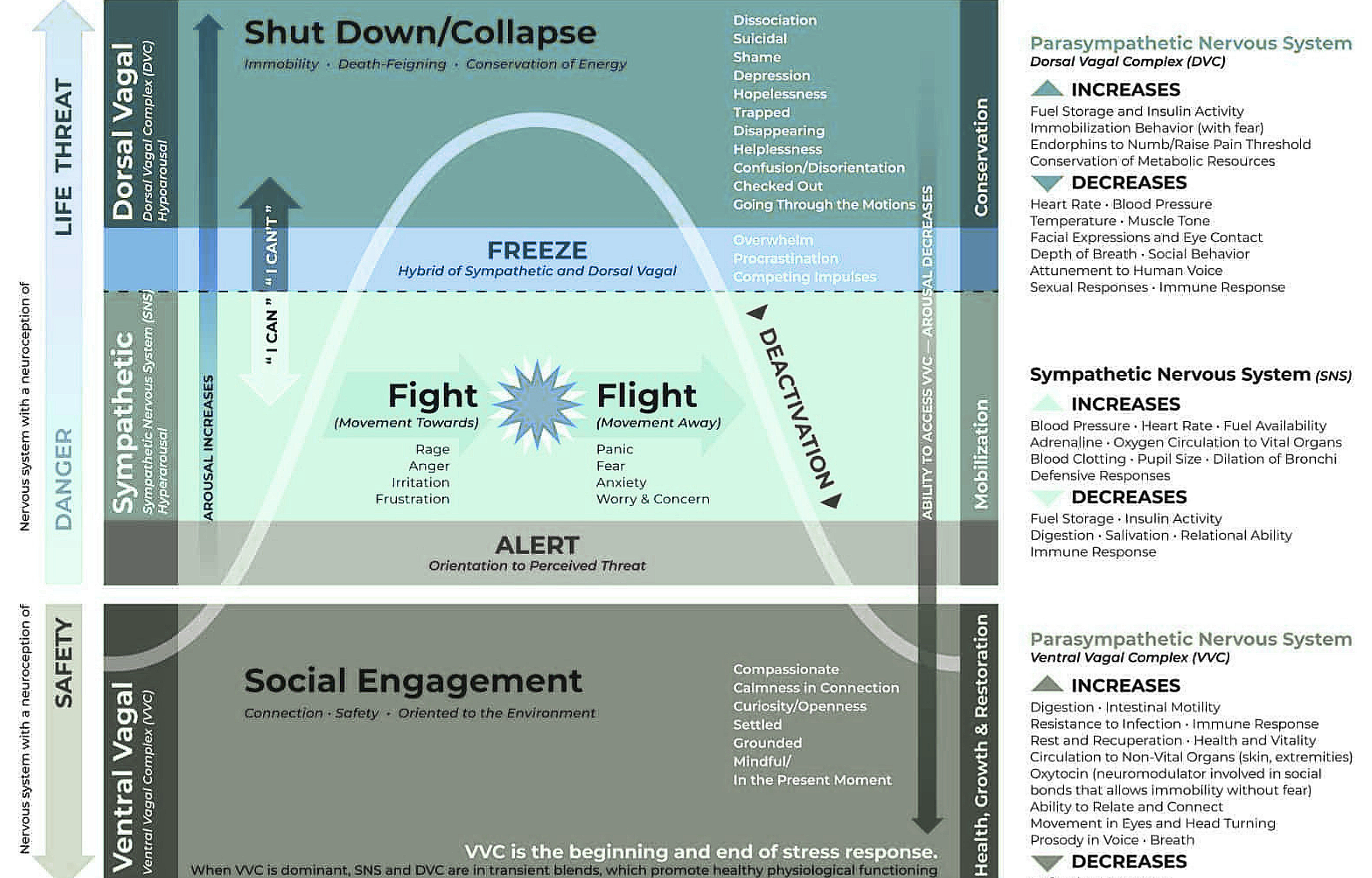
The Role of the Nervous System
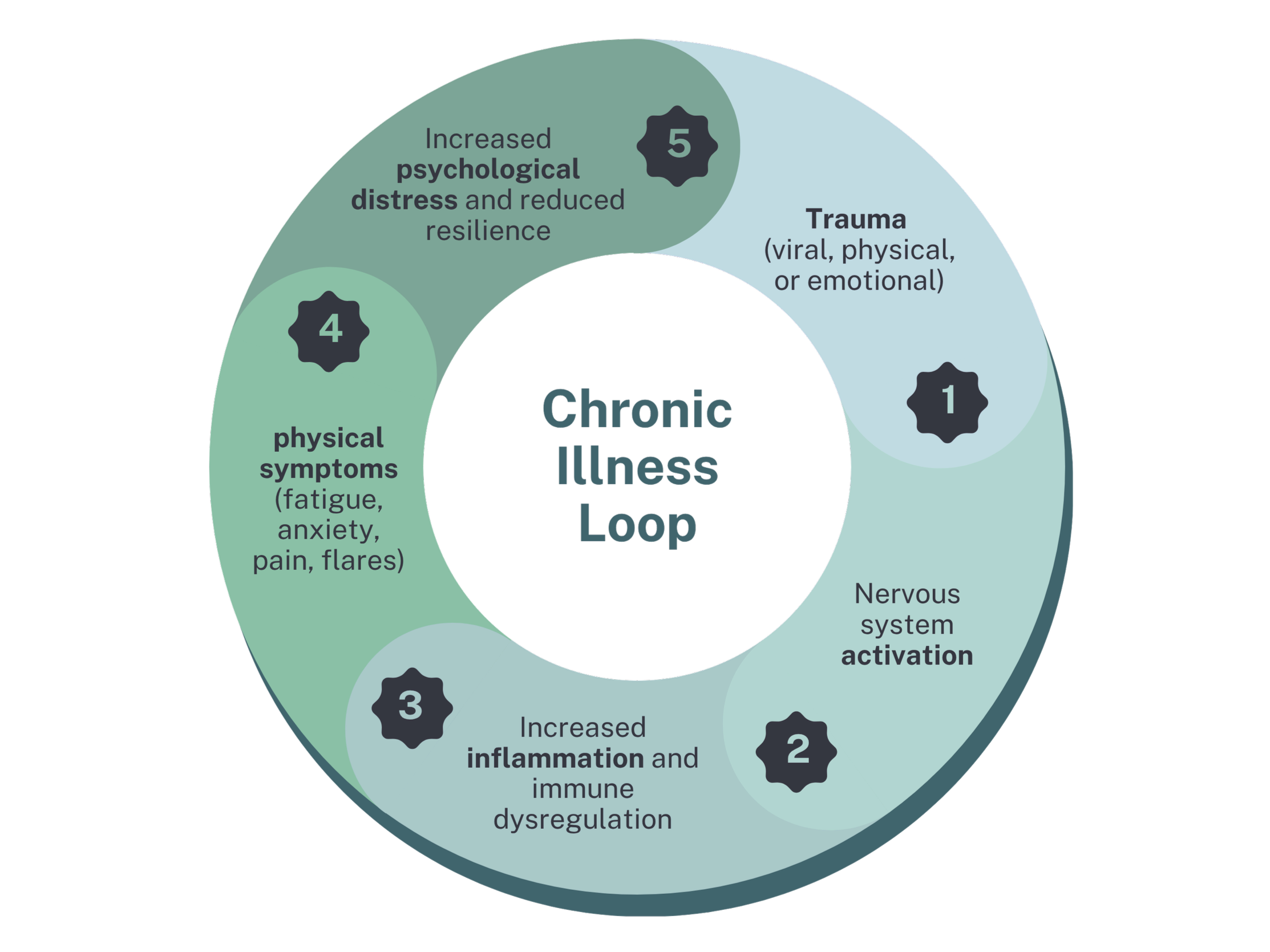
Your nervous system plays a central role in how your body responds, recovers, and maintains stability over time. It influences immune function, inflammation, and the way your body processes and recovers from physical strain.
When your system has been under prolonged stress, it can begin to operate in patterns of heightened activation or depletion.
Working at the level of the nervous system allows for changes that extend beyond symptoms, supporting the system as a whole.
When the nervous system becomes more supported and regulated:
✓ your body is less reactive to stress and internal triggers
✓ recovery becomes more efficient and consistent
✓ inflammation and physical responses often become less intense
✓ your system becomes more stable and resilient over time
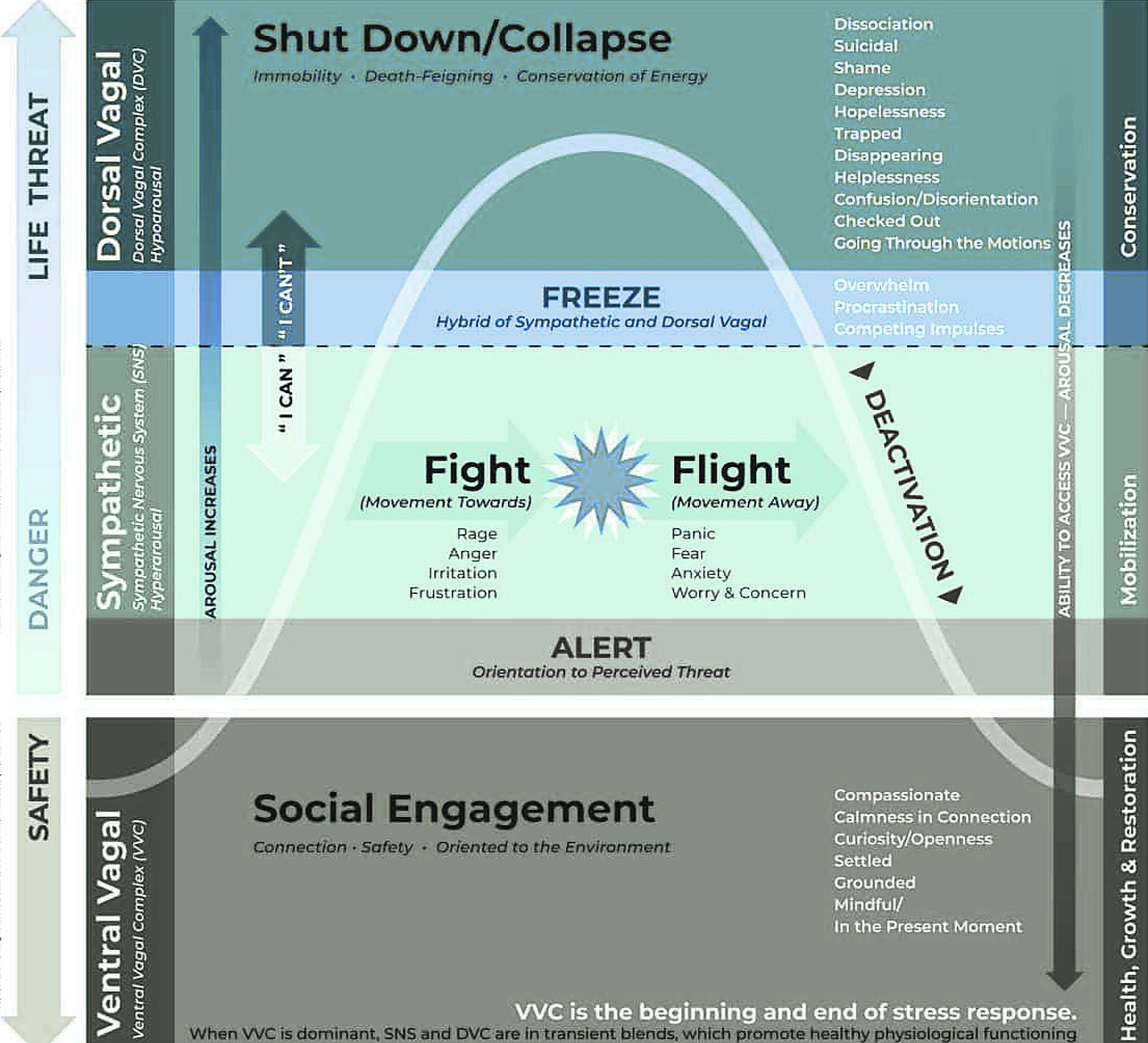
Prolonged stress and trauma influences how the nervous and immune systems function over time by increasing inflammation, stress regulation, and creating a system that becomes more reactive and slower to recover.The Link Between Trauma and Chronic Health Conditions
2-3X Higher Risk
of developing autoimmune conditions with a history of PTSD or complex trauma
Elevated Inflammation
markers are consistently shown in people with adverse childhood experiences or a history of PTSD
Reported 50-70%
of people with chronic pain experience meaningful improvements with psychological intervention
Begin to connect pieces of your experience.
A Holistic Approach to healingThis work to heal is not based on a single method.
It is guided by a clear understanding of how patterns are held across the nervous system, the body, and lived experience, and is tailored to what is most central in your presentation.
At different points in the process, the work may involve emotional processing, working with internal patterns and protective responses, supporting nervous system regulation, or exploring how stress and life experience are influencing the body over time.
Modalities such as cognitive work, parts-based approaches, somatic therapy, and relational frameworks are integrated as needed, not as separate techniques, but as part of a cohesive process.
The aim is not simply insight, but change at the level where these patterns are formed and maintained, supporting greater psychological stability, recovery, and overall functioning.
Healing Across Six Dimensions
Cognitive
1
From constant mental effort spent monitoring your body, anticipating patterns, and trying to make sense of what’s happening → toward a clearer, more settled relationship with your thoughts, without the same need to track, analyze, or figure everything out.
Behavioral
2
From organizing your life around managing, anticipating, or working around your body → toward moving through your day with more flexibility, choice, and responsiveness.
Emotional
3
From carrying the emotional weight of what you’ve experienced, along with the ongoing impact of living in your body → toward the ability to process, feel, and move through your experience with greater steadiness.
Relational
4
From feeling alone in your experience and adjusting connection around how you feel → toward relationships where you feel more understood, supported, and able to be present.
Somatic
5
From a nervous system that remains on alert, reactive, or easily overwhelmed → toward a more regulated and supported internal state.
Spiritual
6
From a sense of disconnection, uncertainty, or lack of coherence in your experience → toward a more grounded sense of self, meaning, and direction.
What You’ll Notice
As the work unfolds, clients often experience:
✓ patterns that once felt automatic beginning to feel more flexible
✓ less mental energy spent monitoring, anticipating, or trying to make sense of how your body will respond
✓ more space between what you feel in your body and how you respond to it
✓ relationships feeling more stable, with less need to adjust, withdraw, or overextend based on how you feel
✓ a growing sense of internal clarity, with more trust in your thoughts, needs, and decisions
Over time, this often includes a greater sense of stability in your body, more consistency in how you experience yourself, and a way of moving through your life that feels more grounded, responsive, and aligned.
Healing begins with a single truth:
You are not meant to do this alone.
If you recognize yourself in these patterns and are looking for a more complete way of understanding and working through your experience, you can begin here.
Let’s get started.
Chronic illness writing and resources
-

When the Body Remembers
How Trauma Lives in Your Nervous System
-
Is Your Anxiety A Histamine Issue?
When talk therapy just isn’t enough.
-
When Survival Becomes A Symptom
The Link Between Complex Trauma and Chronic Illness